The Power of Habit
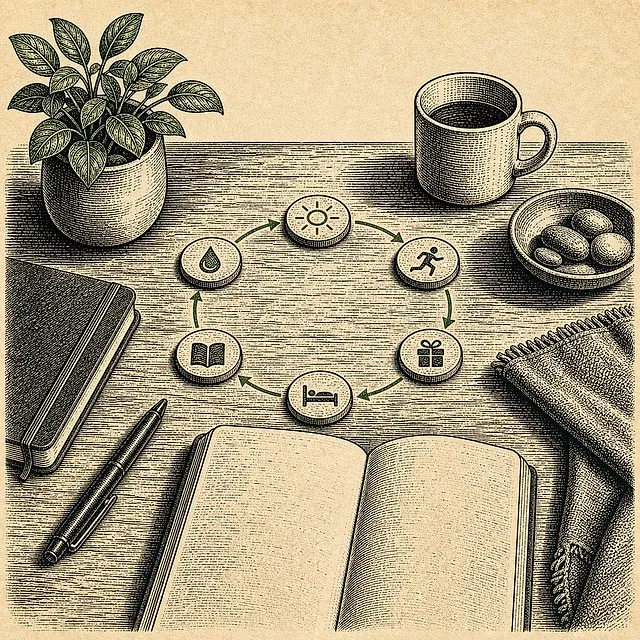
The challenge of overcoming inertia and establishing productive habits is a common struggle for many people. A key to understanding how we can create and maintain good habits lies in the neurological structure known as the basal ganglia. In this write-up, I will briefly touch on the role of the basal ganglia in habit formation and automatic behaviours, providing insight into how we can make our daily lives more efficient.
The basal ganglia, a cluster of neurological tissue deep in the brain, plays a central role in recalling patterns and acting on them, working alongside other regions rather than housing every habit by itself. It allows us to perform tasks automatically, conserving mental energy for more demanding activities.
According to Charles Duhigg’s book, The Power of Habit, the basal ganglia is central to storing and recalling patterns through a process called chunking. This process allows the mind to identify which habit to use based on perceived cues. The conscious mind then triggers the associated habit and relaxes until the stored behavioural pattern is complete. When the automatic behaviour is finished, the mind ramps back up to ensure the desired result is achieved.
Duhigg frames every habit as a three-part loop: a cue that triggers the behaviour, a routine the brain runs automatically, and a reward that tells it the loop is worth remembering. Your phone buzzes (cue), you reflexively open social media (routine), and you get a small hit of novelty (reward), and the loop is reinforced. The practical leverage here is that you usually can’t erase a habit, but you can keep the same cue and reward while swapping the routine: when the phone buzzes, take three slow breaths or jot a line in a notebook instead. Same trigger, same payoff, different behaviour.
Our daily routines consist of numerous automatic actions, such as getting dressed or locking the door. These patterns have been acquired through long-term learning and can be performed without conscious attention. Animals also develop a variety of action skills after long-term learning, even when facing complex tasks.
In conclusion, understanding the role of the basal ganglia in habit formation can help us overcome inertia and establish productive habits. By harnessing the power of the basal ganglia, we can transform difficult routines into automatic habits, making our daily lives more efficient and freeing up mental energy for other endeavours. With a better understanding of the neurological processes at play, we can work towards creating and maintaining habits that positively impact our lives.